

%402x%20(1).svg)
%402x.svg)
%402x.svg)
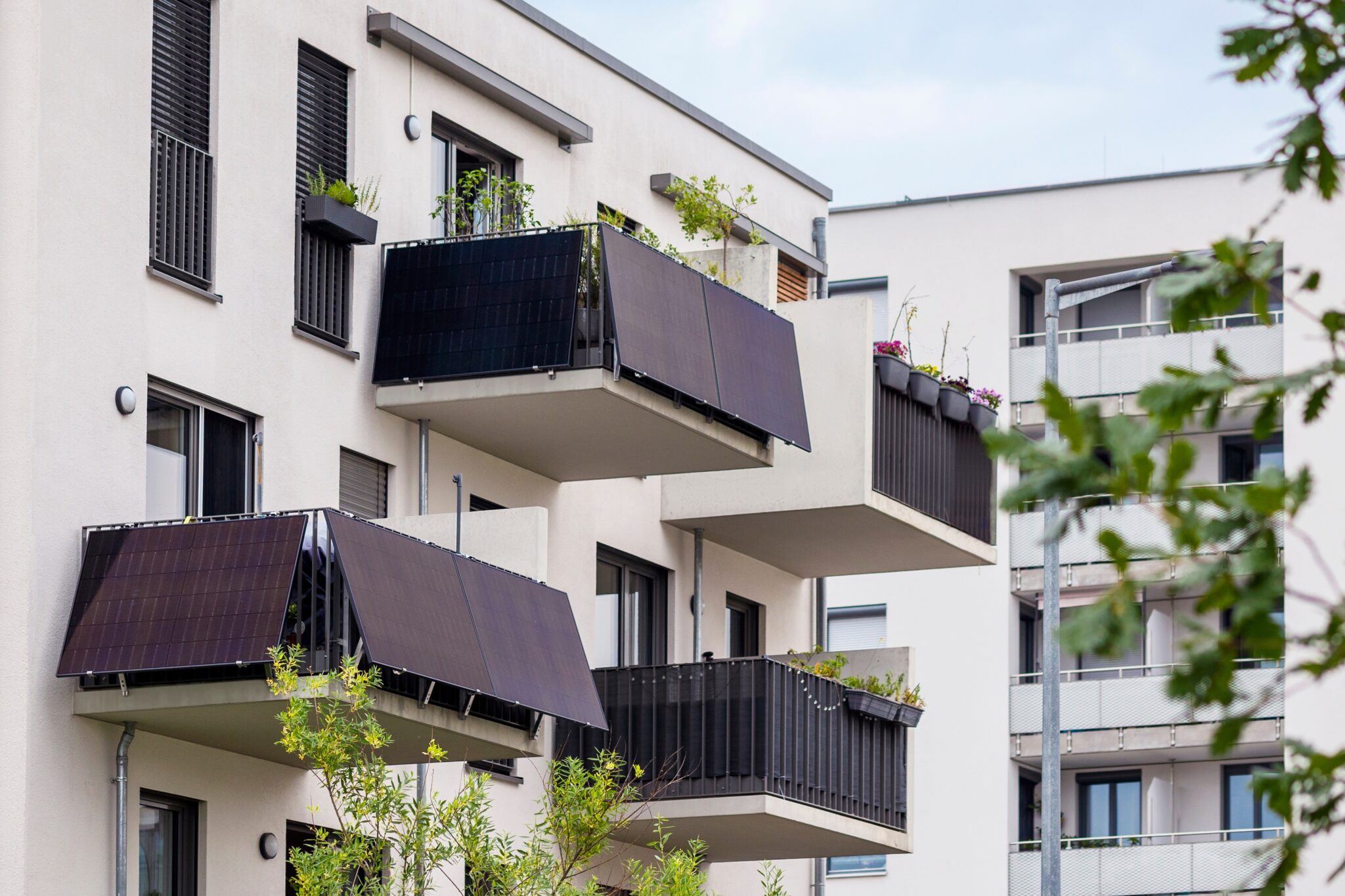
Balkonkraftwerke / Balcony Solar: The Surprisingly Simple Way Apartments Are Going Solar
When most people think about solar power, they picture a single-family home with panels spread across a roof in the suburbs. But what if you live in an apartment? Or rent? Or simply don’t control the roof above your head?
That’s where balcony solar comes in—and it’s quietly changing how cities around the world think about clean energy.
Balcony solar (often called plug-in solar or mini-PV) is exactly what it sounds like: small solar panels mounted on a balcony railing or exterior wall that plug directly into your home’s electrical system. No roof. No major construction. No long approval cycles. Just sunlight and a socket.
And yes—it actually works.
So… What Exactly Is Balcony Solar?
At its core, a balcony solar setup is refreshingly simple:
- One or two solar panels (usually 300–450 watts each)
- A small microinverter attached to the panel
- Mounting hardware for a balcony railing or wall
- A standard household plug
You mount the panel, plug it in, and the system immediately starts feeding power into your apartment. That electricity is used first by whatever is already running—your fridge, Wi-Fi router, laptop, or TV.
No batteries. No complicated controls. No special training.
If you’ve ever plugged in a window AC unit, you already understand 90% of the concept.
How It Works (Without Getting Too Technical)
Here’s the plain-English version:
- Sun hits the panel
- Panel makes electricity
- Microinverter converts it to grid-compatible power
- Your apartment uses that power instantly
Your meter simply pulls less electricity from the grid while the sun is shining.
That’s it.
Balcony solar isn’t about selling power back to the utility or running your entire home off-grid. It’s about shaving down your everyday energy use—quietly and consistently.
Why Balcony Solar Took Off in Europe First
If balcony solar feels “new,” it’s really not—especially in Europe.
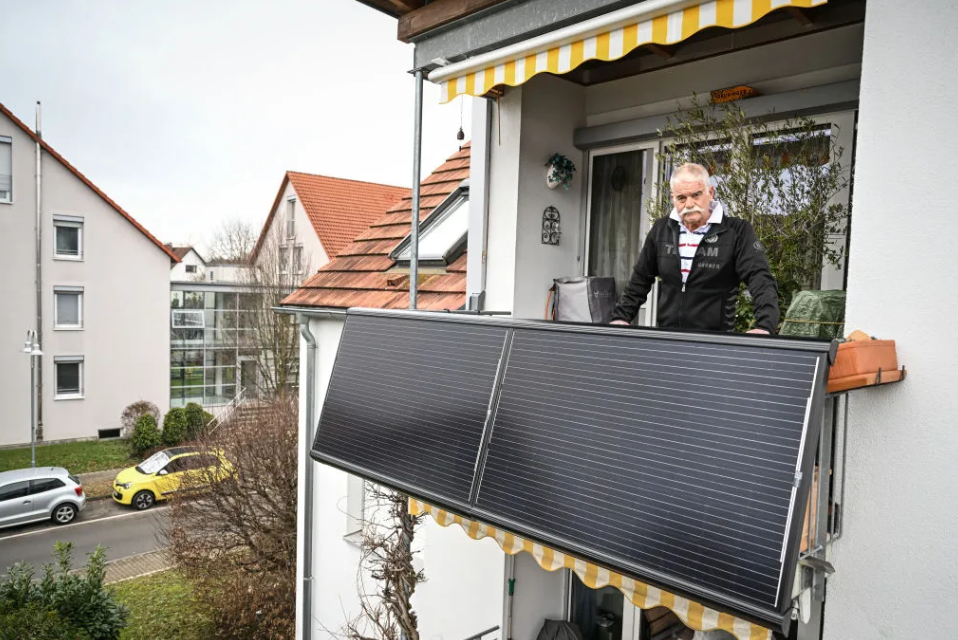
Germany: Where Balcony Solar Went Mainstream
Germany is ground zero for balcony solar adoption. There, these systems are known as Balkonkraftwerke, and they’ve become almost as normal as recycling bins.
Why Germany?
- Very high electricity prices
- Large renter population
- Clear national rules (typically capped at 600–800 watts)
- A culture that embraces renewable energy
By 2024, Germany had over one million registered balcony solar systems—most owned by everyday people living in apartments.
That’s not a niche. That’s a movement.
Other European Countries Followed Quickly
Countries like the Netherlands, Austria, and Switzerland didn’t reinvent the idea—they refined it.
Switzerland, for example, emphasizes strict electrical standards, while the Netherlands focuses on simplifying approvals in dense urban housing. Across Europe, balcony solar is increasingly treated less like “infrastructure” and more like an appliance.
Buy it. Install it. Use it.
Balcony Solar in Asia: Small Spaces, Big Impact
In places where space is at a premium, balcony solar feels almost inevitable.
Japan is a great example. Urban apartments dominate, rooftops are scarce, and energy security is a national concern. Japanese balcony systems are often smaller, but highly efficient—and engineered with lightweight materials and seismic safety in mind.
The idea isn’t to power everything. It’s to make every square meter count.
What About the United States?
The U.S. is… complicated.
Balcony solar exists here, but adoption is slow. Not because the technology doesn’t work—but because regulations, utility rules, and liability concerns vary wildly by state and even by city.
That said, interest is growing:
- High electricity rates in states like California
- More people renting longer-term
- Greater awareness of energy resilience
Pilot programs and code clarifications are starting to appear, and it’s likely only a matter of time before balcony solar becomes more common in U.S. cities.
Why People Love Balcony Solar
Balcony solar isn’t flashy. That’s part of the appeal.
It’s accessible
You don’t need a roof, a contractor, or a long-term commitment.
It’s affordable
Most systems cost between $300 and $900, putting solar within reach for people who were previously locked out.
It scales quietly
One panel doesn’t sound like much—until you multiply it by millions of apartments.
It changes behavior
People who install balcony solar almost always become more aware of when and how they use electricity.
The Honest Downsides
Balcony solar isn’t perfect—and it doesn’t pretend to be.
- It won’t eliminate your electric bill
- Output depends on orientation and shading
- Rules still vary by country and city
- Some landlords dislike the appearance
But here’s the key point: it doesn’t have to be perfect to be useful.
Balcony solar is about progress, not purity.
Where Balcony Solar Is Headed Next
The future of balcony solar looks surprisingly sophisticated for such a simple idea:
- Smart inverters that limit export automatically
- Small integrated batteries for evening use
- Building-wide aggregation programs
- Utility-approved “nano-generation” tariffs
Think of it less as a replacement for rooftop solar—and more as its urban cousin.
Final Thought
Balcony solar flips the traditional energy model on its head. Instead of waiting for massive infrastructure projects or perfect policy alignment, it lets individuals participate right now—one panel at a time.
In a world that’s getting more urban, more electric, and more expensive to power, that’s a pretty compelling idea.
References & Further Reading
- Fraunhofer ISE – Plug-In PV Systems in Germany
- Bundesnetzagentur – Balcony Solar Registration Data
- International Energy Agency (IEA) – Distributed Solar PV
- SolarPower Europe – Balcony PV Market Brief
- IEEE Spectrum – Plug-and-Play Solar Systems
- European Commission – Renewable Energy in Apartments


%402x%20(dark).svg)
%402x%20(dark).svg)
%402x.svg)
%402x.svg)
%402x.svg)