

%402x%20(1).svg)
%402x.svg)
%402x.svg)

The Four Chaplains: A Story of Faith, Unity, and Ultimate Sacrifice
In the early hours of February 3, 1943, the U.S. Army transport ship Dorchester was struck by a German U-boat torpedo in the icy waters of the North Atlantic. Chaos followed—darkness, freezing temperatures, and the terrifying realization that there were not enough lifeboats or life jackets for everyone on board. Out of that fear and confusion emerged one of the most enduring stories of courage in American history: the story of the Four Chaplains.
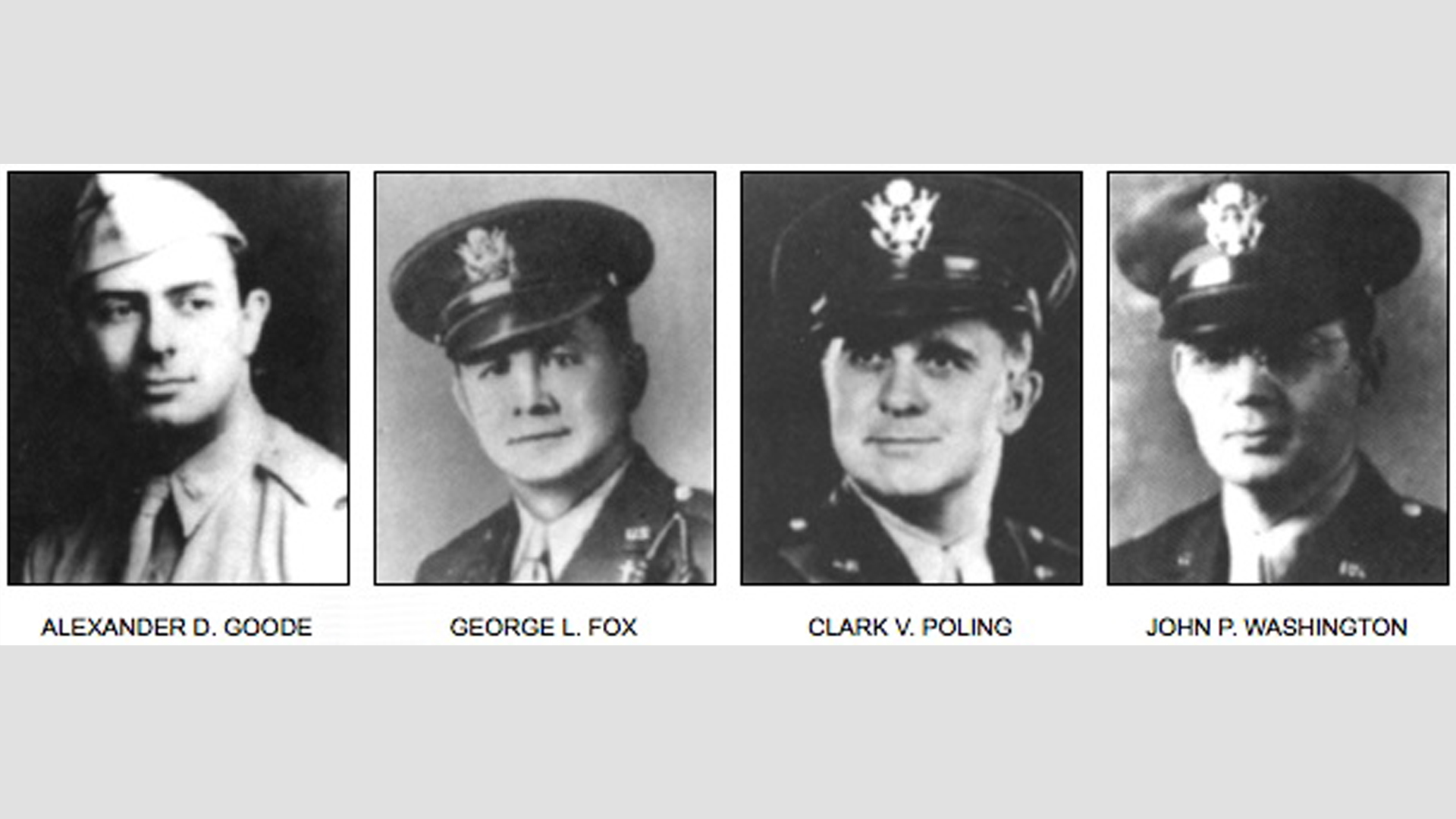
The four men—George L. Fox, Alexander D. Goode, Clark V. Poling, and John P. Washington—represented different faith traditions, but shared a single commitment: to serve others without hesitation.
As the ship began to sink, the chaplains moved calmly among the soldiers. They guided men to lifeboats, helped the wounded, and distributed life jackets. When the supply of life jackets ran out, each chaplain gave his own to a stranger. Survivors later recalled seeing the four men standing together on the sloping deck, arms linked, praying aloud as the ship slipped beneath the waves.
None of the chaplains survived.
What makes the Four Chaplains story so powerful is not only the sacrifice itself, but what it represents. At a time when religious and cultural divisions were often sharply drawn, these men demonstrated unity through action. They did not ask who a soldier was, where he came from, or what he believed. They saw only a fellow human being in need.
In leadership terms, the Four Chaplains embody servant leadership at its highest form. Their authority did not come from rank or command, but from moral clarity and personal example. In moments of extreme crisis, they chose compassion over self-preservation and solidarity over separation.
Today, the legacy of the Four Chaplains lives on through memorials, educational programs, and annual commemorations. Their story is taught in military academies, leadership courses, and faith communities—not as a lesson in heroics alone, but as a reminder of what is possible when values are lived rather than merely spoken.
In a world still struggling with division, the Four Chaplains offer a timeless message: unity is not the absence of difference, but the decision to stand together despite it.


%402x%20(dark).svg)
%402x%20(dark).svg)
%402x.svg)
%402x.svg)
%402x.svg)